Best Castles in Denmark and Near Copenhagen
My first morning in Copenhagen smelled like salt water, damp brick, and cinnamon pastry. I walked past the row houses toward Kongens Have with a cheap coffee in hand, turned a corner through the trees, and ran headlong into Rosenborg. Its red brick walls and green copper spires looked like something pulled straight out of a bedtime story. When people plan trips across Scandinavia, they often imagine jagged fjords or minimalist furniture. But the sheer concentration of historic castles in denmark is what really caught me off guard on my first visit years ago.
Denmark is compact. You can base yourself in the capital, sleep in the same hotel every night, and spend four straight days exploring moated strongholds, royal bedchambers, and windswept ramparts overlooking Sweden. A few sit right in the middle of downtown traffic, while others require an easy forty-minute train ride out through beech forests and coastal towns. This guide walks through the very best royal residences, how to see them without wasting your money, and how to pick the ones that match your travel pace.
Book your frederiksborg castle experience:
Castles in Copenhagen You Can Walk To
You do not need to leave the city limits to get your fill of royal history. Three distinct royal sites sit within walking distance of each other in central Copenhagen, though they feel wildly different from one another. Rosenborg Castle is the obvious starting point. Built in 1606 by King Christian IV as a summer playhouse - outside the city ramparts at the time - it holds the royal crown jewels in a fortified basement vault. Upstairs, the rooms are small, dark, and crammed with tapestries, amber trinkets, and heavy wooden furniture. The Long Hall on the third floor features three silver lions guarding coronation chairs made from narwhal tusks. It smells like old oak and beeswax.
Ten minutes away lies Amalienborg Palace. It is less a fairytale fortress and more an elegant, neoclassical octagonal plaza where the monarch still actually lives. Four identical palaces face each other across the cobblestones, with Frederik's Church looming in the background. The guard change happens daily at noon, accompanied by drums and brass music if the monarch is in residence. Honestly, watching the Royal Life Guards march through the streets in their wool uniforms and bearskin hats feels delightfully old-school in a city that otherwise runs on electric cargo bikes and craft beer.
Christiansborg Palace sits on Slotsholmen, an island separated from the center by canals. It has burned down and been rebuilt twice since the late 1700s. Today, this massive neo-baroque complex houses the Danish Parliament, the Supreme Court, and the Ministry of State. Despite serving as the machinery of modern government, the Royal Reception Rooms remain open to visitors. The Great Hall holds seventeen modern tapestries woven for Queen Margrethe II, depicting over a thousand years of Danish history in loud, startling colors that shock visitors expecting dusty portraits. Down below, you can walk through the ruins of Bishop Absalon's 1167 fortification in the damp basement foundations.
Pro tip: The tower at Christiansborg is free to visit, offers a sweeping view over the city roofs, and has an elevator so you can skip climbing narrow stairs.
Fairytale Castles Near Copenhagen: North Zealand
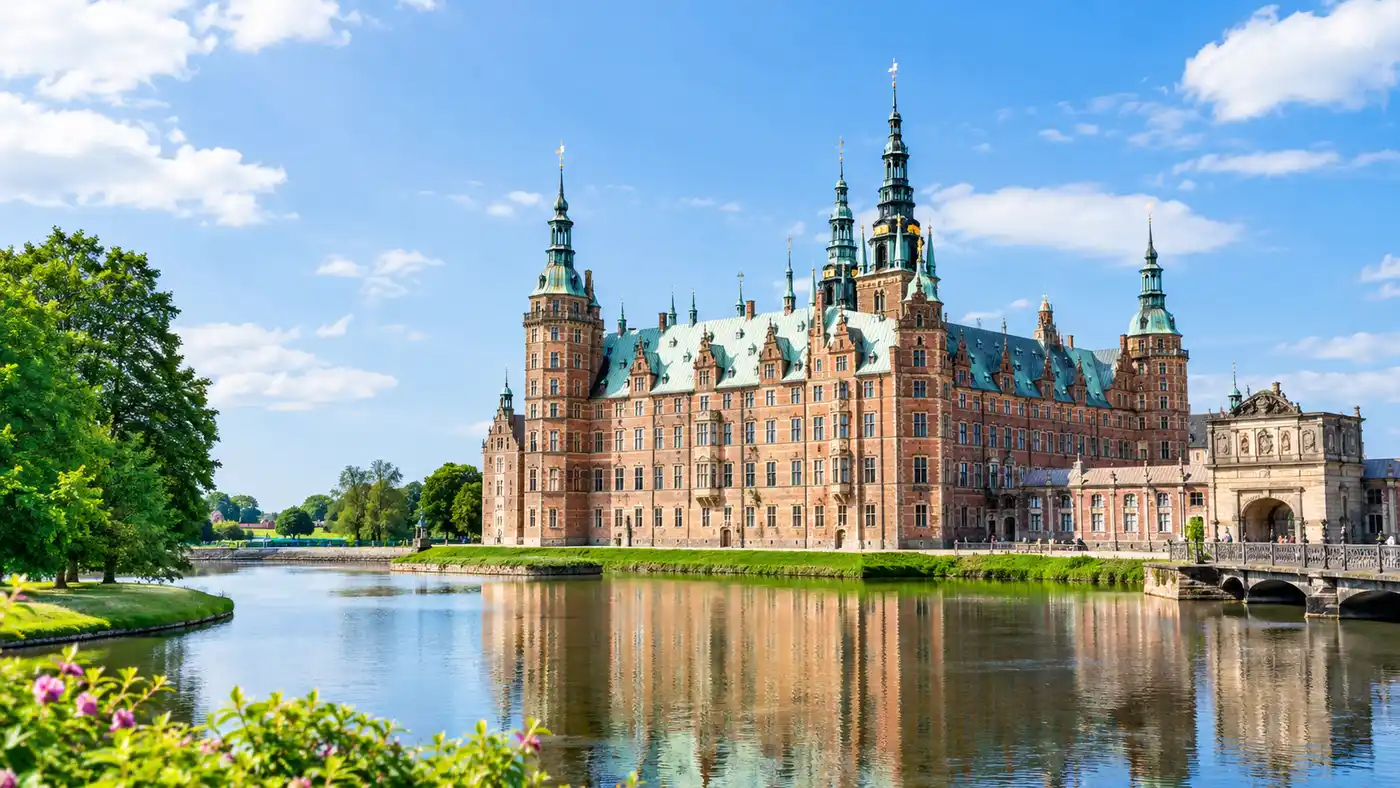
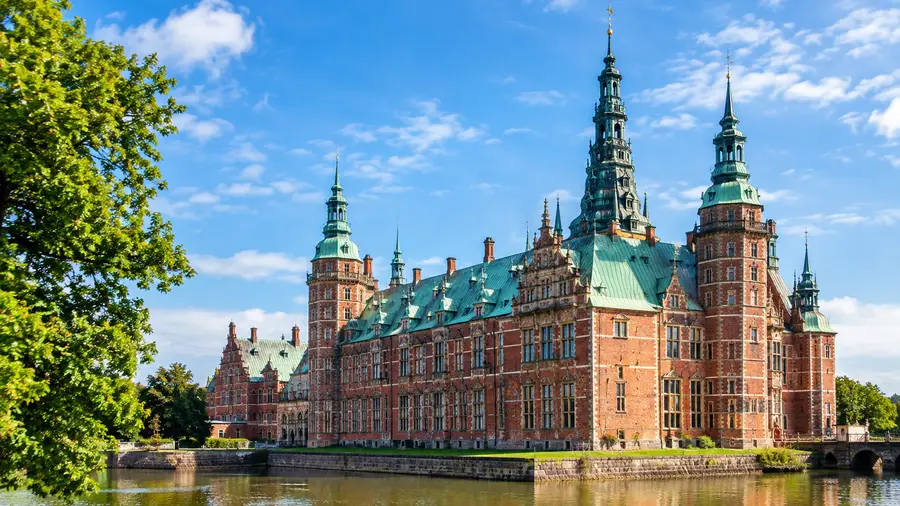
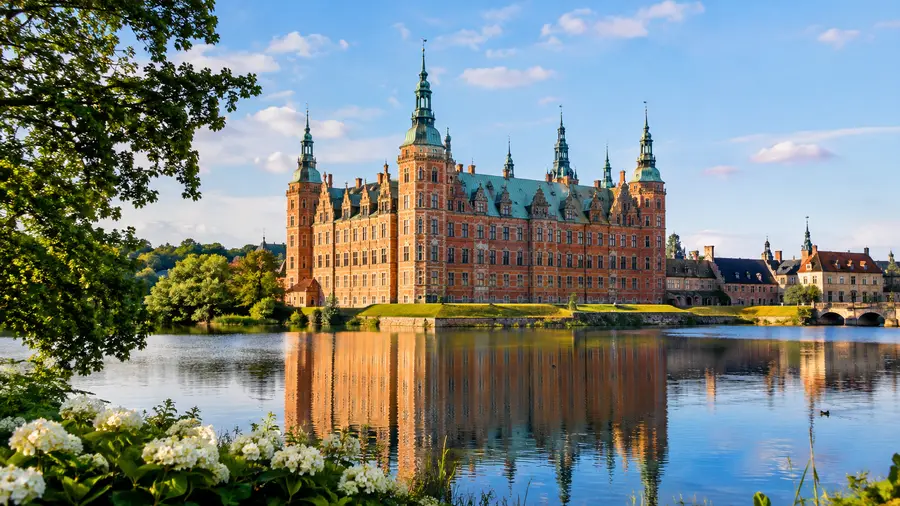
If you have time for only one journey out into the countryside, point yourself north toward the region Danes call Kongernes Nordsjælland. This is where Danish kings escaped the stench of 17th-century Copenhagen to hunt deer, stage banquets, and intimidate visiting ambassadors. Frederiksborg Castle in Hillerød is the heavyweight champion here. Built across three small islets in the middle of the Castle Lake, this Dutch Renaissance masterpiece feels dizzying in scale. Christian IV tore down his father's manor to construct it, sparing no expense on sandstone decorations, marble arches, and a monumental Neptune fountain in the outer courtyard.
A devastating fire gutted the interior in 1859, but J.C. Jacobsen, the founder of Carlsberg Brewery, financed a meticulous reconstruction that turned the palace into the Museum of National History. There are more than seventy exhibition rooms filled with portraits, gilded ceilings, and priceless furniture. The Castle Chapel survived the blaze nearly intact, showcasing original 17th-century stucco and royal coats of arms painted along the upper gallery walls. If you decide to go, make sure to explore the grounds too; the terraced baroque cascades in the back drop straight into the lake, offering the best photo angles in the country.
Note: Frederiksborg requires at least two full hours just for the museum interior, so plan a half-day trip rather than rushing it between other stops.
Getting there is dead simple. You can catch the S-train Line A from Copenhagen Central and be in Hillerød in 38 minutes; our guide on how to get to Frederiksborg Castle from Copenhagen covers the walk from the station and the ferry route across the lake. If you want to know what to expect once you step through the gates, take a look at our detailed breakdown of the art and chapel inside Frederiksborg Castle before you book.
Further up the coast in Helsingør sits Kronborg Castle, immortalized by William Shakespeare as Elsinore in Hamlet. The vibe here is completely different from Frederiksborg. Where Frederiksborg is delicate, decorative, and romantic, Kronborg is stark, salty, and defensive. It was placed right at the narrowest pinch of the Øresund sound, where Danish gunners extracted hefty tolls from every commercial ship sailing between the North Sea and the Baltic. On clear afternoons, you can gaze across the grey water and watch cars driving on the highway in Helsingborg, Sweden, just four kilometers away.
The casemates beneath Kronborg are chilly, damp, and pitch black. You have to navigate the brick tunnels with your phone flashlight until you stumble into the underground chamber of Holger Danske. According to legend, this stone warrior sleeps quietly until Denmark faces mortal danger, at which point he will wake up and drive off the invaders. Kids love it down there, but watch your head on the low brick arches.
Castles of Denmark Beyond the Capital: Funen and Jutland
If you rent a car and drive west across the Great Belt Bridge, you leave Zealand behind and hit the island of Funen. Funen feels like a rural garden patch, and tucked into its southern fields is Egeskov Castle. Egeskov is widely considered Europe's best-preserved Renaissance water castle. It stands on oak piles driven into a small lake, built in 1554 during a period of fierce civil unrest. According to local lore, an entire forest of oak trees was chopped down just to build the foundation.
Unlike most state-run properties, Egeskov is still a living family estate owned by the Ahlefeldt-Laurvig-Bille family. The castle rooms are open to visitors, but the real attraction is the estate grounds. It feels like a high-end cultural playground. You will find massive hedge mazes, vintage car museums, antique motorcycle barns, and canopy walkways suspended in tall beech trees. It gets crowded with families in July, but the grounds are so sprawling that you can easily find a quiet corner near the English garden.
Heading further west into the Jutland peninsula brings you to Koldinghus in the town of Kolding. This was the border fortress protecting royal Danish lands from the Duchy of Schleswig. A massive fire in 1808 left it a smoking ruin for over a century until a bold modern restoration in the 1970s and 1980s stabilized the shell. Instead of faking historic brickwork, the architects suspended wooden walkways, laminated pine columns, and raw steel trusses inside the ruined stone walls. It won international architecture awards and gives you a strange, breathtaking juxtaposition of medieval ruin and sleek Danish woodwork.
- Egeskov: Best for families, full-day garden wanderers, and classic machinery geeks.
- Koldinghus: Best for architecture buffs interested in modern design meeting historic preservation.
- Spøttrup Castle: Located in northern Jutland, this is Denmark's grimmest, most authentic medieval moated fortress, complete with thick earthen ramparts and arrow slits.
Book your frederiksborg castle experience:
Comparing the Top Denmark Castles
Choosing which sites to visit comes down to how much transit time you want to spend and whether you prefer decorative art museums or military history. Most short-trip visitors try to cram three castles into two days, which can lead to royal museum fatigue. Comparing the primary options side by side helps narrow down your itinerary.
| Castle Name | Location | Transit from Copenhagen | Entry Fee (Adult) | Primary Highlight |
|---|---|---|---|---|
| Rosenborg | Central Copenhagen | None (walkable) | 140 DKK | Crown jewels and coronation chairs |
| Christiansborg | Central Copenhagen | None (walkable) | 175 DKK | Working royal reception rooms and ruins |
| Frederiksborg | Hillerød, North Zealand | 40 minutes by S-train | 110 DKK | Grand Renaissance interiors and baroque lake park |
| Kronborg | Helsingør, North Zealand | 45 minutes by regional train | 145 DKK | Hamlet connection, coastal guns, and dark casemates |
| Egeskov | Kværndrup, Funen | 2 hours by train and bus / car | 265 DKK | Moated exterior, hedge mazes, and vintage collections |
If your schedule only allows one regional excursion, Frederiksborg gives you the most spectacular visual punch for your transit ticket. If you care deeply about literature or maritime history, choose Kronborg instead. It is technically possible to visit both Frederiksborg and Kronborg in a single day using the local 920R bus between Hillerød and Helsingør, but your legs will hate you by five o'clock.
Practical Tips for Exploring Danish Castles
Visiting castles in Scandinavia requires a tiny bit of logistics planning, mostly around transit tickets, locker tokens, and weird northern opening hours. Royal museums in Denmark do not stay open late. Outside the peak summer window from June through August, many sites close their gates at 4:00 PM sharp, with the last ticket sold forty-five minutes before closing.
Here are several practical rules to remember when organizing your visits:
- Get a Copenhagen Card if doing three or more: The 48-hour card costs around 689 DKK and covers admission to Rosenborg, Christiansborg, Frederiksborg, and Kronborg, plus all train and metro rides throughout the entire capital region.
- Book Rosenborg time slots in advance: Because Rosenborg has tiny rooms and tight corridors, you must reserve a specific fifteen-minute entry window online during high season, even if you hold an all-inclusive city pass.
- Wear sensible flat shoes: Historic floors in Danish palaces are often unpolished parquet, rough cobblestone, or uneven stone flags. Several sites require you to wear slip-on blue shoe covers over your boots to protect centuries-old woodwork.
- Check winter maintenance schedules: Fountains in the baroque gardens at Frederiksborg are turned off from October through late April, and outdoor garden sculptures are often boxed up in protective wooden cases against frost.
Luggage storage is another minor detail that catches travelers off guard. Kronborg and Frederiksborg both require you to store backpacks and bulky tote bags in coin-operated lockers before entering exhibition spaces. You will usually need a 10 or 20 DKK coin to unlock them, though modern digital locker systems are slowly being phased in across Copenhagen properties.
Frequently Asked Questions about castles in denmark
Which castle in Denmark is the most famous?
Kronborg Castle is internationally the most famous because William Shakespeare used it as the setting for Hamlet. Domestically, Frederiksborg Castle is regarded as the grandest Renaissance palace, while Rosenborg is the most visited because it houses the royal crown jewels in downtown Copenhagen.
Can you see Frederiksborg and Kronborg in the same day?
Yes, you can take the S-train from Copenhagen to Hillerød in the morning for Frederiksborg, catch local bus 920R or the regional train across North Zealand to Helsingør in the early afternoon for Kronborg, and take the coast train back to Copenhagen. It makes for an eight-hour day with lots of walking.
Are Danish castles included in the Copenhagen Card?
Yes. The standard Copenhagen Card covers admission to Rosenborg Castle, Christiansborg Palace (Reception Rooms, Ruins, and Royal Stables), Frederiksborg Castle, Kronborg Castle, and Amalienborg Palace Museum, as well as the public trains and buses needed to reach them.
What is the difference between a slot and a palads in Danish?
In the Danish language, both words translate roughly to castle or palace, but slot is far more common and describes any fortified royal or noble stronghold, as well as country estates. Palæ or palads is typically used for unfortified town mansions and residences built from the 18th century onward.
Quick Reference
- Rosenborg: Crown jewels, central park location, requires booked time slot.
- Frederiksborg: Best day trip, 38 mins on S-train, massive lakeside museum.
- Kronborg: Hamlet's coastal fortress, dark subterranean tunnels, views of Sweden.
- Christiansborg: Seat of modern parliament, free panorama tower, historic ruins underneath.
Book your frederiksborg castle experience:
My Take on Picking Your Castle Itinerary
Do not try to see every single palace on this list unless you are spending two weeks in the country. Palace overload is real, and by the fifth gilded ceiling you will find yourself staring blankly at portraits of bearded kings whose names all blend into Christian and Frederik. Pick two: one inside Copenhagen and one in North Zealand. Wander Rosenborg in the morning, grab some open-faced smørrebrød from a nearby bakery, and then take the train north to walk the lakeside gardens at Frederiksborg. That combination gives you everything Denmark does best, pairing deep royal heritage with quiet, beautiful landscapes you will remember long after you pack your bags.
Read more about frederiksborg castle.